


What Should Every First-Time Author Know Before Self Book Publishing
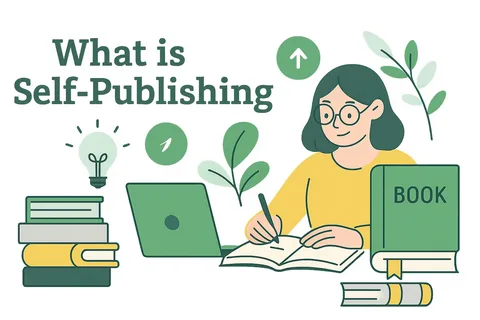
Before starting self-publishing, first-time authors should understand the complete publishing process, including professional editing, book formatting, cover design, ISBNs, copyright, pricing, marketing, and audience building. Proper preparation improves credibility, enhances reader experience, and increases the chances of long-term publishing success.
The popularity of self publishing has grown significantly over the past decade, giving authors greater creative control and access to global audiences. Industry reports from organizations such as the Bowker ISBN agency show that the number of self-published titles has increased substantially over the years, reflecting a growing preference for independent publishing among writers. This growth means more opportunities—but also more competition. Standing out requires preparation, quality, and a clear publishing strategy rather than simply releasing a finished manuscript.
What Is Self Book Publishing?
Self book publishing is the process of independently publishing a book without relying on a traditional publishing company to manage production and distribution. Authors retain creative control over the manuscript, cover, pricing, and marketing while taking responsibility for publishing decisions.
Unlike traditional publishing, independent publishing allows authors to choose their own timelines and publishing platforms. However, this freedom also means authors must oversee tasks that would otherwise be handled by publishing professionals.
| Traditional Publishing | Self Book Publishing |
|---|---|
| Publisher manages production | Author manages the publishing process |
| Limited creative control | Full creative control |
| Lower royalty percentage | Higher royalty potential |
| Longer publication timeline | Faster route to market |
Why Preparation Matters Before Publishing
Publishing a book without adequate preparation often leads to disappointing results. Readers expect professionally edited content, attractive cover designs, and a smooth reading experience regardless of whether a book is traditionally or independently published.
Research from publishing industry surveys consistently shows that book quality significantly influences reader reviews and recommendations. Even minor grammar mistakes, inconsistent formatting, or poor cover design can reduce reader confidence and impact long-term sales.
Preparation also helps authors develop realistic expectations. Publishing is not only about releasing a book—it is about creating an experience readers will appreciate and recommend.
Step 1: Complete and Refine Your Manuscript
Every successful book begins with a polished manuscript. Very few first drafts are ready for publication, which is why revision is an essential stage of the publishing journey.
Before considering publication:
- Complete multiple rounds of self-editing.
- Identify inconsistencies in plot or structure.
- Remove unnecessary repetition.
- Improve clarity and readability.
- Seek constructive feedback from beta readers.
- Revise based on objective criticism.
Taking time to refine the manuscript often results in a stronger final product and a more satisfying experience for readers.
Step 2: Invest in Professional Editing
Professional editing is one of the most valuable investments first-time authors can make. Editing enhances readability, eliminates errors, and improves the overall quality of the manuscript.
Common editing stages include:
- Developmental editing: Improves structure, organization, pacing, and content.
- Copy editing: Corrects grammar, punctuation, consistency, and style.
- Proofreading: Identifies remaining spelling and formatting errors before publication.
Well-edited books are more likely to receive positive reviews because readers can focus on the story or message instead of distracting mistakes.
Step 3: Design a Professional Book Cover
Readers often form their first impression of a book within seconds. A professional cover communicates quality, genre, and tone before a single page is read.
An effective book cover should:
- Match reader expectations within its genre.
- Use readable typography.
- Remain clear as a small digital thumbnail.
- Reflect the book's subject matter.
- Maintain consistent branding if part of a series.
Industry research on consumer behavior repeatedly shows that visual presentation influences purchasing decisions across many products, including books.
Step 4: Format Your Book Properly
Formatting directly affects readability. Whether publishing an eBook, paperback, or hardcover edition, the interior layout should provide a comfortable reading experience.
Important formatting considerations include:
- Consistent fonts
- Proper spacing
- Clear chapter headings
- Page numbering
- Clickable table of contents for eBooks
- Appropriate margins
- High-quality images where applicable
Professional formatting minimizes distractions and allows readers to focus on the content.
Step 5: Understand ISBNs, Copyright, and Publishing Rights
Many first-time authors are unfamiliar with the legal and technical aspects of publishing.
Before publication, understand:
- What an ISBN is and when it is required.
- Basic copyright protection in your jurisdiction.
- Distribution agreements.
- Print, eBook, audiobook, and translation rights.
- Licensing opportunities.
Learning these fundamentals helps authors make informed publishing decisions and protects their intellectual property.
Step 6: Build Your Author Platform Before Launch
Publishing a book is only part of the journey. Readers also want to know the person behind the work. Building an author platform before launch makes it easier to reach potential readers and establish credibility.
A strong author platform may include:
- A professional author website
- An email newsletter
- Helpful blog articles
- Reader resources
- Active but purposeful social media profiles
Many book publishers also encourage authors to build an online presence because discoverability increasingly depends on digital visibility. Whether publishing independently or traditionally, readers often search online to learn more about an author before purchasing a book.
Step 7: Develop a Marketing Plan Before Publication
One of the biggest misconceptions among new authors is that marketing begins after publication. In reality, successful promotion often starts months before launch.
A pre-launch marketing strategy may include:
- Building an email list.
- Recruiting beta readers.
- Collecting advance reviews.
- Writing guest articles.
- Appearing on podcasts.
- Sharing behind-the-scenes updates.
- Creating launch announcements.
Early planning helps generate awareness before the book becomes available.
Common Mistakes First-Time Authors Should Avoid
Many publishing challenges can be avoided with careful preparation.
Common mistakes include:
- Publishing without professional editing.
- Using an amateur book cover.
- Ignoring formatting standards.
- Skipping beta readers.
- Not researching the target audience.
- Failing to build an author platform.
- Expecting immediate commercial success.
- Neglecting book marketing.
- Setting unrealistic pricing.
- Ignoring reader feedback after publication.
Recognizing these mistakes early allows authors to improve both their current and future publishing projects.
Case Study: How Andy Weir Turned Independent Publishing into Global Success
Andy Weir's journey with The Martian demonstrates the value of preparation and audience engagement before widespread publication.
Initially, Weir shared chapters of his science fiction novel for free on his personal website, where readers provided valuable feedback. As interest grew, readers requested an eBook version, which he later published independently. Positive reviews and growing popularity eventually attracted the attention of a traditional publisher, leading to international success and a major motion picture adaptation.
Although every author's path is different, Weir's experience highlights several important lessons:
- Focus on producing high-quality content.
- Listen carefully to reader feedback.
- Build an audience before expecting large-scale success.
- Continue improving your work through revisions.
- Treat publishing as a long-term commitment rather than a one-time event.
His story illustrates that thoughtful preparation often creates opportunities beyond the initial publication.
Self Book Publishing Checklist
Before publishing your first book, confirm that you have completed the following:
- Final manuscript revised
- Professional editing completed
- Proofreading finished
- Book cover designed
- Interior formatting finalized
- ISBN requirements understood
- Copyright considerations reviewed
- Author website created
- Email list established
- Marketing plan prepared
- Book description optimized
- Launch schedule organized
Completing this checklist reduces the likelihood of overlooking important publishing tasks.
Conclusion
Self book publishing offers first-time authors unprecedented opportunities to share their work while maintaining creative control. However, successful publishing requires careful planning, attention to detail, and a commitment to delivering quality. From refining your manuscript and investing in professional editing to understanding publishing rights and preparing a marketing strategy, every step contributes to a better reader experience and a stronger author reputation.
Rather than viewing publication as the finish line, consider it the beginning of a long-term journey. Authors who prioritize quality, continue learning, and consistently engage with readers are better positioned to build sustainable writing careers. By preparing thoroughly before your first release, you can publish with greater confidence and create a foundation for future success.
Frequently Asked Questions
1. What should first-time authors know before self book publishing?
First-time authors should understand manuscript editing, formatting, cover design, ISBNs, copyright, pricing, distribution, marketing, and audience building before publishing.
2. Is self book publishing suitable for beginners?
Yes. Many first-time authors successfully publish independently, provided they invest time in learning the publishing process and producing a professional-quality book.
3. Do I need professional editing before publishing?
Professional editing is strongly recommended because it improves readability, eliminates errors, and enhances the overall quality of the book.
4. Should I build an author website before publishing?
Yes. An author website helps establish credibility, improves online discoverability, and provides readers with a central place to learn about you and your books.
5. What are the biggest mistakes first-time authors make?
Common mistakes include publishing too quickly, skipping editing, using poor cover designs, neglecting marketing, and failing to understand publishing rights.
 Russian
 English
 French
 Spanish
 Portuguese
 Deutsch
 Turkish
 Dutch
Dutch
 Italiano
 Romaian
 Portuguese (Brazil)
 Greek
Greek