


Boat Building Company: How Modern Vessels Are Designed and Constructed
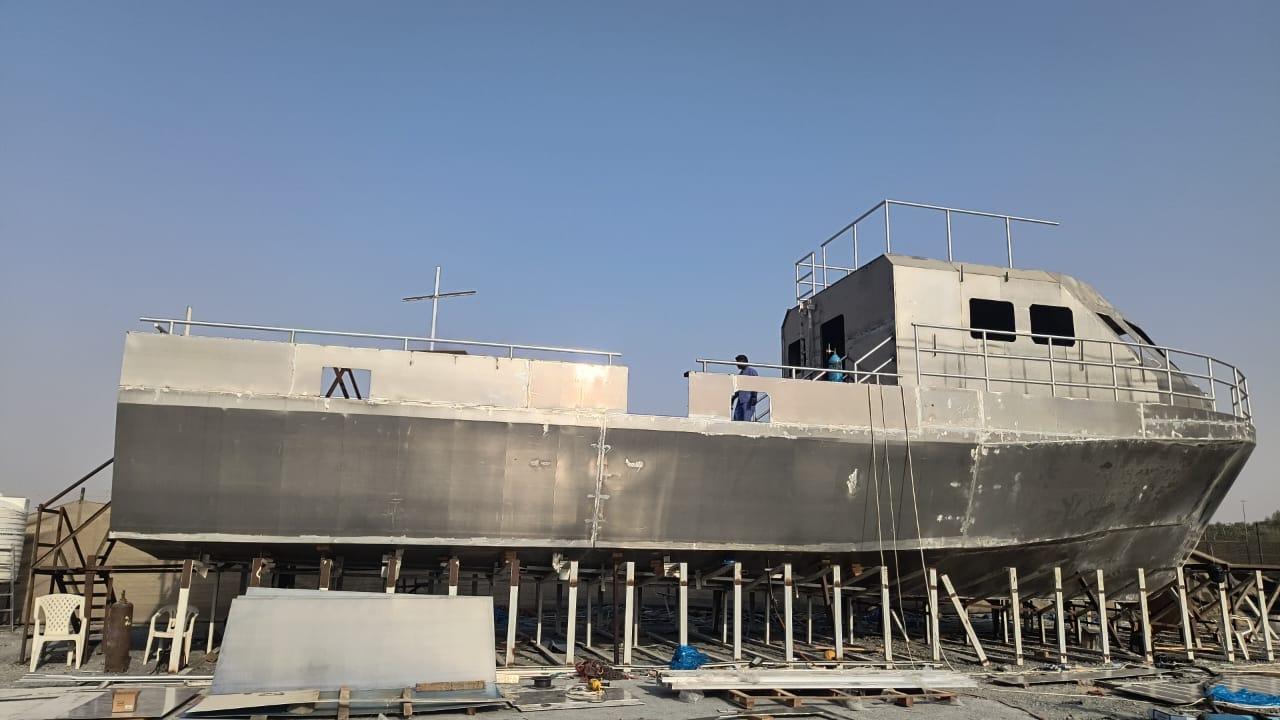
Modern vessels are no longer built simply by assembling metal plates into a floating structure. Today, boat building company projects involve a combination of naval architecture, engineering, advanced materials, digital design, safety systems, and strict quality control. The construction process begins long before the first plate is cut and continues through testing, commissioning, and final delivery.
The global marine industry is also moving toward vessels that offer better fuel efficiency, improved safety, lower maintenance requirements, and longer operational life. According to the International Maritime Organization (IMO), international shipping accounts for around 3% of global greenhouse gas emissions, making efficiency and cleaner marine technologies increasingly important.
For modern vessel builders, the objective is therefore not simply to construct a boat but to develop a reliable marine asset that can perform efficiently under its intended operating conditions.
Understanding the Purpose of the Vessel
The first stage of modern vessel construction is understanding how the vessel will be used. A commercial workboat, passenger vessel, patrol craft, tugboat, fishing vessel, and recreational boat all have different requirements.
Engineers normally consider:
- Required operating speed
- Passenger and crew capacity
- Cargo requirements
- Fuel capacity
- Operating range
- Sea conditions
- Draft limitations
- Stability requirements
- Safety standards
- Maintenance requirements
These factors determine the vessel's size, hull shape, propulsion system, equipment arrangement, and structural configuration.
For example, a vessel operating in shallow coastal waters may require a different hull design from one intended for offshore operations. Similarly, a high-speed workboat needs different performance characteristics from a heavy-duty commercial vessel.
Modern Aluminium Boat Building
Material selection plays a major role in vessel performance. Steel, aluminum, composites, and other specialized materials can be selected according to the vessel's purpose and operating environment.
aluminium boat building has become an important approach for many lightweight commercial and workboat applications because aluminum offers a useful combination of strength and low weight. Reducing vessel weight can help lower the power required for propulsion and may contribute to improved fuel efficiency.
Aluminum can also be useful for vessels where speed, maneuverability, and shallow draft are important. However, selecting the right material requires careful consideration of structural loads, corrosion protection, fabrication methods, maintenance, and expected service life.
The decision should therefore be based on the complete lifecycle of the vessel rather than simply the initial construction cost.
Design and Naval Architecture
Once the operational requirements and materials have been established, naval architects develop the vessel's technical design.
Modern vessel design increasingly relies on computer-aided design and three-dimensional modeling. These technologies allow engineers to visualize the vessel before construction begins and evaluate important factors such as:
- Hull geometry
- Weight distribution
- Stability
- Structural strength
- Hydrodynamic performance
- Machinery arrangement
- Interior space
- Equipment placement
Digital models also make communication easier between designers, engineers, fabricators, and installation teams.
Computer-based analysis can help identify potential structural or performance issues at an early stage. Detecting these problems during design is generally more efficient than correcting them after fabrication has already started.
The Role of Aluminium Boats Manufacturers
The growing demand for lightweight and efficient vessels has increased the importance of specialized aluminium boats manufacturers in modern marine construction.
Aluminum fabrication requires appropriate engineering knowledge, welding practices, cutting accuracy, and quality control. The material behaves differently from steel during fabrication, so construction teams must carefully manage welding procedures and dimensional accuracy.
During production, aluminum plates and structural profiles are measured and cut according to approved engineering drawings. These components are then assembled into sections before being joined to create the vessel's structural framework.
Proper fabrication is essential because the hull must withstand loads created by waves, propulsion, cargo, machinery, and regular vessel operations.
Hull Fabrication and Structural Construction
After the design has been finalized, physical construction begins. The hull is generally constructed in sections before different assemblies are joined together.
Modern fabrication can involve computer-controlled cutting equipment, specialized welding systems, precision measurement tools, and inspection procedures.
Quality control is maintained throughout this process. Engineers and inspectors may verify dimensions, weld quality, material specifications, structural alignment, and workmanship.
For aluminum vessels, welding quality is particularly important because incorrect welding procedures can affect structural integrity and dimensional accuracy.
The objective is to create a hull that provides the required strength without adding unnecessary weight.
Expertise of Aluminium Boat Builders
The work performed by aluminium boat builders extends beyond basic metal fabrication. Modern builders must understand how hull design, propulsion, weight distribution, stability, and onboard systems interact with each other.
A well-designed vessel needs an appropriate balance between structural strength and weight. Excessive structural weight can increase propulsion requirements, while insufficient structural strength can affect safety and durability.
Experienced builders therefore follow engineering specifications carefully and coordinate different construction teams throughout the project.
This integrated approach helps ensure that the completed vessel performs according to its intended operational requirements.
Installing Mechanical and Electrical Systems
Hull construction is only one part of modern vessel development. After the primary structure is completed, various mechanical and electrical systems need to be installed.
These may include:
- Main engines
- Propulsion equipment
- Steering systems
- Fuel systems
- Electrical distribution
- Navigation equipment
- Communication systems
- Bilge systems
- Fire protection
- Ventilation
- Emergency equipment
System placement must be carefully planned because vessels have limited internal space. Machinery should also remain accessible for inspection, maintenance, and future repairs.
Proper system integration can improve reliability and reduce maintenance difficulties throughout the vessel's operational life.
Stability and Marine Safety
Safety is a fundamental consideration during vessel design and construction. A vessel must maintain adequate stability under its expected loading conditions.
Naval architects evaluate factors such as buoyancy, center of gravity, freeboard, displacement, and weight distribution.
Different loading scenarios may be assessed to understand how the vessel will behave during normal operations and potentially challenging conditions.
Safety equipment is also selected according to the vessel's category and operational requirements. Depending on the vessel, this may include fire detection systems, fire suppression equipment, life-saving appliances, emergency communication systems, alarms, navigation equipment, and emergency power.
Compliance with applicable maritime regulations and classification requirements is an important part of professional vessel construction.
Testing and Quality Control
Testing begins during construction rather than only after the vessel is completed. Inspections can be performed on materials, welds, machinery installations, electrical systems, piping, and structural components.
Non-destructive testing methods may also be used to identify defects that cannot be detected through visual inspection alone.
Once construction is substantially complete, commissioning and sea trials provide another important stage of evaluation.
During sea trials, engineers may assess:
- Maximum and operating speed
- Acceleration
- Steering response
- Maneuverability
- Propulsion performance
- Vibration
- Engine operation
- Navigation systems
- Emergency systems
Any problems identified during testing can be addressed before the vessel enters commercial service.
Improving Fuel Efficiency and Performance
Fuel efficiency has become one of the major priorities in modern vessel design. Since fuel represents a significant operating expense for many commercial vessels, even small improvements in efficiency can provide meaningful long-term benefits.
Hull design is particularly important because water resistance influences the amount of power needed to move a vessel. A carefully optimized hull can reduce resistance and improve overall propulsion efficiency.
Weight reduction can also contribute to better performance. Lightweight construction, efficient machinery, optimized propulsion, and appropriate hull geometry can work together to reduce unnecessary energy consumption.
The IMO's focus on reducing greenhouse gas emissions from shipping has further encouraged the marine industry to explore improved efficiency, alternative fuels, hybrid systems, and other cleaner technologies.
Technology and Sustainable Vessel Construction
Technology is transforming almost every stage of vessel construction. Three-dimensional design, digital engineering, automated cutting, advanced welding equipment, and computerized testing are helping improve construction accuracy.
Digital documentation can also help track components, inspections, modifications, and maintenance information throughout a vessel's lifecycle.
Sustainability is becoming another important consideration. Modern projects increasingly focus on reducing material waste, improving fuel efficiency, extending vessel service life, and selecting systems that can support lower-emission operations.
Future vessel designs are expected to make greater use of hybrid propulsion, electrification, alternative fuels, energy-efficient hulls, and lightweight construction.
VU Marine and Modern Vessel Construction
VU Marine follows a modern approach to marine construction that combines vessel design, fabrication, engineering, system integration, and marine services.
The focus is on developing practical vessel solutions according to operational requirements while maintaining attention to structural strength, safety, efficiency, and long-term performance.
From initial planning and construction to testing and commissioning, every stage can influence the reliability and operational value of a marine vessel.
Conclusion
Modern vessel construction is a detailed engineering process involving design, material selection, fabrication, machinery installation, system integration, testing, and quality control. Each stage contributes to the final vessel's safety, performance, efficiency, and durability.
The growing emphasis on fuel efficiency and environmental performance is also changing the way vessels are designed. Lightweight materials, optimized hulls, efficient propulsion systems, digital engineering, and sustainable technologies are becoming increasingly important.
For marine operators, a modern vessel must do more than float and move. It needs to provide dependable performance while controlling operating costs and meeting relevant safety requirements.
As marine technology continues to develop, vessel construction will become increasingly focused on efficiency, customization, sustainability, and advanced engineering. VU Marine represents this modern approach by combining marine construction expertise with practical solutions designed around the operational needs of today's marine industry.
 French
 English
 Spanish
 Portuguese
 Deutsch
 Turkish
 Dutch
Dutch
 Italiano
 Russian
 Romaian
 Portuguese (Brazil)
 Greek
Greek