


Top 10 Ways Car Diagnostics Can Save Time and Prevent Costly Repairs

Modern vehicles are more dependent on electronic systems than ever before. From engine management and emissions controls to transmission systems, airbags, ABS, and stability control, many components are monitored continuously by onboard computers. When something goes wrong, the vehicle may record a diagnostic trouble code (DTC) that can help technicians identify the source of the problem.
This is where a car diagnostic test becomes useful. Rather than relying solely on visible symptoms or trial-and-error repairs, diagnostic equipment can provide valuable information about what is happening inside a vehicle’s electronic systems. For drivers searching for a car diagnostic test Near Me, understanding how the process works can make it easier to decide when professional diagnostics are appropriate.
Across the car diagnostic test UK market, diagnostic technology is increasingly becoming a routine part of vehicle maintenance. It can support fault finding, confirm suspected problems, and help technicians determine which areas require further inspection.
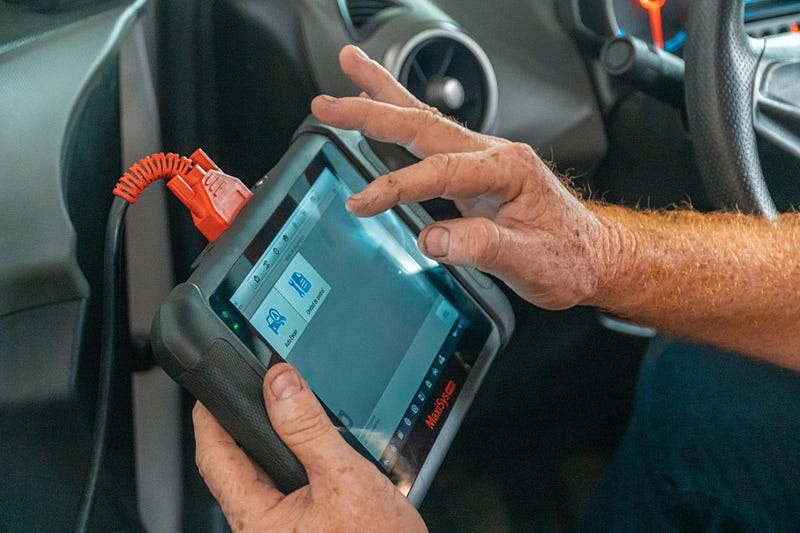
What Is a Car Diagnostic Test?
A car diagnostic test involves connecting specialist diagnostic equipment to a vehicle’s onboard diagnostic system, commonly through the OBD or OBD-II port. The equipment communicates with electronic control units (ECUs) and can retrieve stored or current fault information.
Depending on the vehicle and diagnostic equipment being used, a technician may be able to examine systems such as:
- Engine and fuel management
- Automatic and automated transmissions
- Anti-lock braking systems (ABS)
- Airbag and supplementary restraint systems
- Electronic stability control
- Battery and charging systems
- Emissions-related components
- Parking and driver-assistance systems
- Body control modules
- Instrument cluster and communication faults
A diagnostic code does not necessarily mean that the component named in the code needs immediate replacement. Instead, it provides a starting point for investigation. Professional diagnosis involves interpreting the code alongside symptoms, live data, technical information, and physical inspection.
This distinction is important because replacing parts based only on a fault code can result in unnecessary expense.
Why Vehicle Diagnostics Matter More Than Ever
Vehicle technology has changed significantly over the last two decades. Older vehicles often relied more heavily on mechanical systems, while modern cars contain numerous interconnected electronic modules and sensors.
For example, a warning light may be triggered by a faulty sensor, wiring problem, communication issue, voltage fluctuation, or an underlying mechanical fault. A diagnostic scan can help narrow down the possibilities.
The growth of hybrid and electric vehicles is also changing automotive diagnostics. High-voltage systems, battery management systems, electric drive components, and sophisticated energy-management electronics require appropriate diagnostic procedures and equipment.
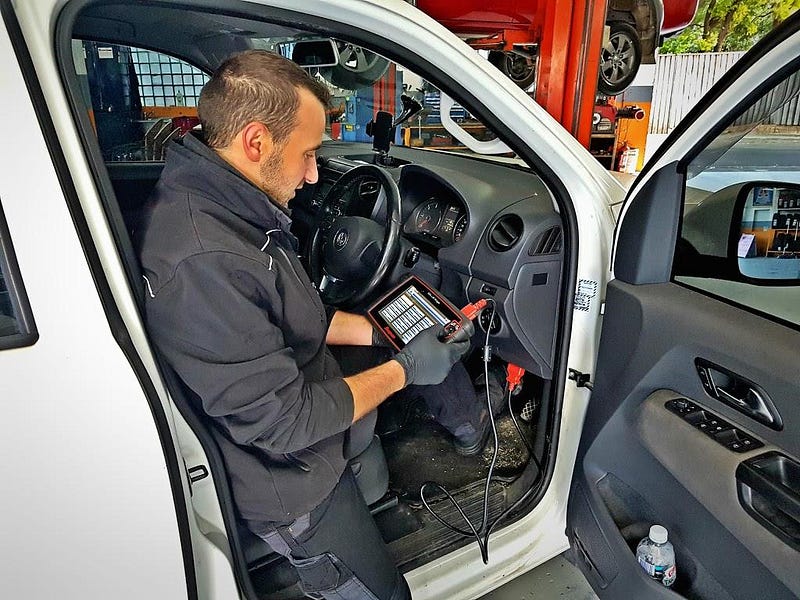
Another important trend is the increasing integration of advanced driver-assistance systems (ADAS). Features such as parking assistance, lane monitoring, adaptive cruise control, and collision-warning systems rely on sensors, cameras, radar, and electronic control modules. Diagnosing these systems can require more than a basic code reader.
Consequently, a modern diagnostic assessment is increasingly about understanding how different vehicle systems communicate rather than simply reading a single error code.
When Should You Consider a Diagnostic Test?
Drivers sometimes associate diagnostics only with illuminated dashboard warning lights. While warning lights are an obvious reason to investigate, diagnostics can be useful in several other situations.
Consider a diagnostic assessment when:
- The engine warning light appears.
- The vehicle experiences intermittent performance problems.
- Fuel consumption changes unexpectedly.
- The engine is difficult to start.
- The transmission behaves unusually.
- ABS, airbag, or stability-control warnings appear.
- Electrical components behave inconsistently.
- The vehicle enters limp-home mode.
- A fault repeatedly returns after a repair.
- You are preparing to investigate an unexplained problem.
Some faults may not produce an obvious warning light immediately. Symptoms such as rough running, hesitation, reduced performance, unusual gear changes, or intermittent electrical failures can justify further investigation.
For motorists specifically looking for car diagnostic Trowbridge, selecting a service with suitable diagnostic equipment and technicians who understand fault-code interpretation can be particularly important. A scan should ideally be part of a wider diagnostic process rather than treated as an isolated answer.
Understanding Diagnostic Trouble Codes
One of the most misunderstood aspects of vehicle diagnostics is the meaning of a diagnostic trouble code.
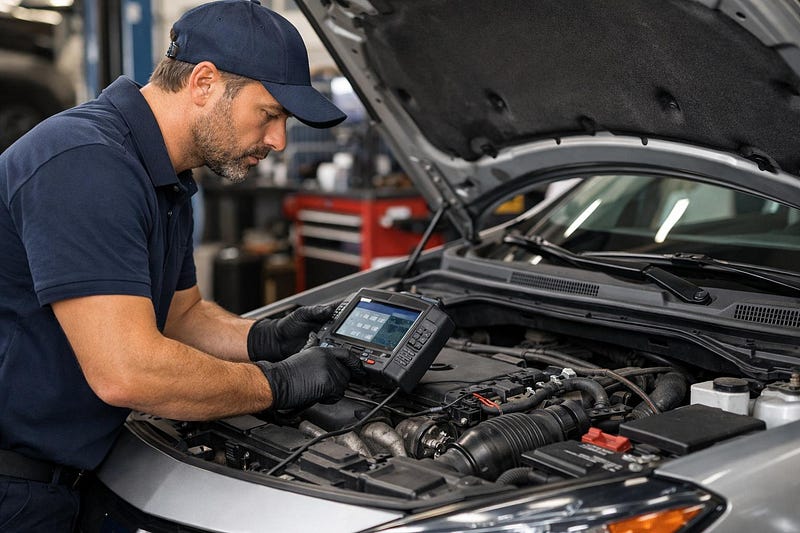
A DTC is essentially a digital indication that a vehicle control system has detected a condition outside its expected parameters. The code can identify an affected system or circuit, but it may not identify the precise physical cause.
For example, a sensor-related code could potentially result from:
- A defective sensor
- Damaged wiring
- A poor electrical connection
- A problem with the power supply
- An issue elsewhere in the system
- A mechanical condition affecting sensor readings
This is why experienced diagnostic work involves testing rather than simply replacing the component associated with a code.
A technician may examine live sensor readings, compare values against expected ranges, test electrical circuits, inspect connectors, and evaluate whether the reported fault matches the vehicle’s symptoms.
Clearing a fault code without identifying its cause is generally not a complete repair. The warning may return once the vehicle detects the underlying issue again.
Common Challenges With Vehicle Diagnostics
One challenge is the increasing complexity of modern vehicles. A basic scanner may provide useful information, but it may not communicate with every control module or provide manufacturer-specific data.
Another issue is intermittent faults. An electrical problem may occur only under certain temperatures, driving conditions, or vibration levels. Such faults can require additional testing beyond an initial scan.
Battery voltage is another factor worth considering. Low or unstable voltage can cause unusual electronic behaviour and generate multiple fault codes. A diagnostic process may therefore include checking the battery and charging system before assuming that every stored code represents a separate component failure.

Communication faults can also be difficult to trace. Modern vehicles contain networks that allow electronic control modules to exchange information. A problem with wiring, connectors, voltage supply, or network communication can sometimes affect several systems simultaneously.
These challenges demonstrate why diagnostic equipment is most effective when combined with technical knowledge and systematic testing.
Practical Tips for Drivers Seeking Diagnostics
If you are arranging a diagnostic assessment, providing as much information as possible can help the technician.
Make a note of:
- When the problem first appeared
- Whether it happens during starting, acceleration, braking, or cruising
- Any dashboard warning lights
- Unusual noises or smells
- Changes in fuel consumption
- Recent repairs or component replacements
- Whether the problem occurs consistently or intermittently
Avoid assuming that a particular component is responsible simply because of something read online. Vehicle symptoms can have several possible causes, and professional testing can help distinguish between them.
It is also useful to ask what the diagnostic process will include. A quality assessment may involve scanning relevant modules, reviewing codes, checking live data, performing additional tests, and explaining the findings.
For motorists researching a car diagnostic test UK, this approach provides a more useful benchmark than simply comparing whether a service can read fault codes.
Diagnostics as Part of Preventive Vehicle Maintenance
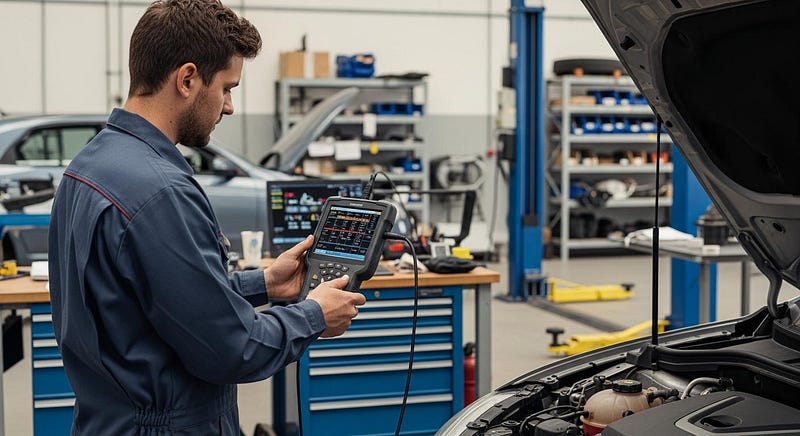
Diagnostic testing should not always be viewed as an emergency service. Electronic diagnostics can complement routine maintenance by helping identify developing problems when symptoms are still relatively minor.
However, diagnostics should not replace conventional servicing. Oil changes, brake inspections, tyre checks, fluid inspections, timing-system maintenance, battery testing, and physical examinations remain important.
The most effective approach combines electronic information with mechanical inspection and the vehicle manufacturer’s recommended maintenance schedule.
For example, if diagnostic information indicates an issue with engine performance, a technician may need to inspect ignition components, intake systems, fuel delivery, vacuum lines, or mechanical components before reaching a conclusion.
In this context, diagnostic equipment is a tool for informed decision-making rather than a substitute for professional expertise.
Choosing a Suitable Diagnostic Service
When comparing local diagnostic services, drivers can consider several practical factors.
Look for a provider that:
- Uses appropriate diagnostic equipment for modern vehicles
- Can access more than basic generic fault codes when required
- Explains diagnostic findings clearly
- Combines electronic scanning with physical inspection
- Investigates the underlying cause rather than simply clearing codes
- Provides relevant information before recommending repairs
For example, S&M Auto Service provides information about car diagnostic testing in Trowbridge, illustrating how local automotive services can incorporate electronic fault finding into broader vehicle troubleshooting.
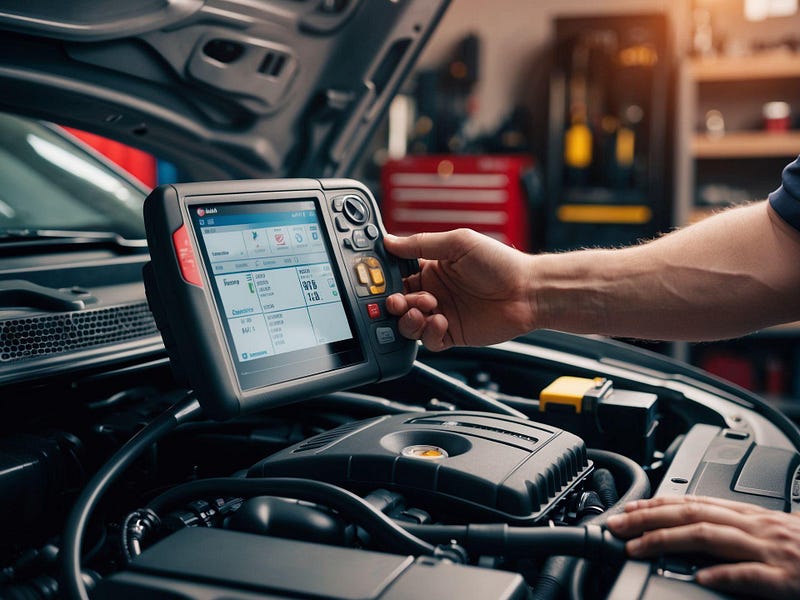
The exact diagnostic requirements can vary considerably between makes, models, engines, and vehicle systems, so the suitability of equipment and technician experience matters.
Conclusion
Modern vehicles are sophisticated electronic and mechanical systems, making accurate fault diagnosis increasingly important. A car diagnostic test can provide valuable information about warning lights, electronic faults, sensor readings, and communication problems, but interpreting that information correctly is just as important as retrieving it.
For drivers searching for a car diagnostic test Near Me, the goal should not simply be to obtain a list of fault codes. A useful diagnostic process combines scan data with symptoms, technical knowledge, physical inspection, and systematic testing.
Whether dealing with an engine warning light, intermittent electrical problem, transmission issue, or unexplained performance change, proper diagnostics can help narrow down potential causes and support more informed repair decisions.
As vehicle technology continues to evolve, diagnostic expertise will remain an important part of responsible vehicle maintenance across the UK. Understanding how diagnostics work allows drivers to approach faults more confidently and avoid unnecessary parts replacement based on assumptions rather than evidence.
https://zerfoon.net/read-blog/44976
https://logcla.com/blogs/1794717/Top-10-Pre-MOT-Checks-Every-UK-Driver-Should-Know
https://vxengine.ru/blogs/176/Top-10-Facts-Every-Driver-Should-Know-About-Clutch-Replacement
 Greek
Greek
 English
 French
 Spanish
 Portuguese
 Deutsch
 Turkish
 Dutch
Dutch
 Italiano
 Russian
 Romaian
 Portuguese (Brazil)