


Top 10 Things to Know Before Clutch Replacement Near Me

A vehicle’s clutch plays a critical role in transferring engine power to the gearbox and allowing drivers to change gears smoothly. Despite its importance, clutch problems often develop gradually, making them easy to overlook until shifting becomes difficult or the vehicle’s performance noticeably changes.
For drivers searching for car clutch repair near me, understanding the symptoms, likely causes, repair options, and potential costs can make it easier to make informed decisions. Whether a clutch is beginning to slip or has become difficult to operate, early assessment can often prevent a relatively manageable problem from developing into a more expensive repair.
How Does a Car Clutch Work?
A conventional manual transmission clutch connects and disconnects the engine from the gearbox. When the clutch pedal is released, the clutch engages and transfers engine power through the transmission to the driven wheels. Pressing the pedal temporarily separates the engine from the gearbox, allowing the driver to select another gear.
The main components generally include:
- Clutch disc
- Pressure plate
- Flywheel
- Release bearing
- Clutch fork or hydraulic mechanism
These components work together under considerable friction and mechanical stress. Because the clutch disc gradually wears through normal use, it is considered a service item rather than a component that lasts indefinitely.
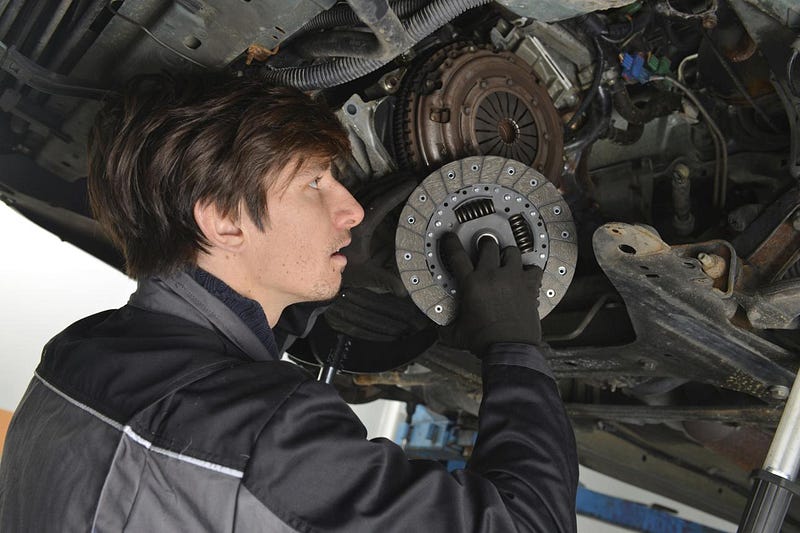
Driving conditions have a significant effect on clutch lifespan. Frequent stop-start traffic, heavy loads, hill starts, towing, and repeated slipping of the clutch can increase wear.
Common Signs That a Clutch Needs Attention
Recognising early symptoms is one of the most practical ways to avoid unexpected breakdowns. Not every clutch problem requires an immediate complete replacement, but unusual behaviour should be professionally assessed.
1. Clutch Slipping
A slipping clutch occurs when engine speed rises without a corresponding increase in road speed. Drivers may notice the engine revving higher when accelerating, particularly in higher gears or when travelling uphill.
This can indicate that the clutch disc is no longer generating sufficient friction to transfer engine power effectively.
2. Difficulty Selecting Gears
If first gear or reverse becomes difficult to select, or the transmission regularly resists gear changes, there may be a problem with the clutch or its hydraulic system.
However, gearbox-related faults can produce similar symptoms. Accurate diagnosis is therefore important before replacing components.
3. Burning Smell
A strong burning odour following heavy clutch use may indicate excessive friction and heat. Occasional smell after severe clutch slipping does not automatically mean the clutch has failed, but repeated occurrences deserve attention.
4. Juddering or Shuddering
A clutch that engages unevenly may cause vibration or judder when moving away from a standstill. Possible causes include a worn clutch disc, contamination, flywheel problems, or other drivetrain issues.
5. Unusual Pedal Feel
A clutch pedal that suddenly becomes unusually heavy, soft, low, or difficult to operate can indicate a hydraulic, mechanical, or clutch-component problem.
Drivers should avoid assuming that every pedal problem means the clutch itself needs replacing. The release mechanism, master cylinder, slave cylinder, or hydraulic fluid system can also be involved.
What Influences Clutch Replacement Cost?
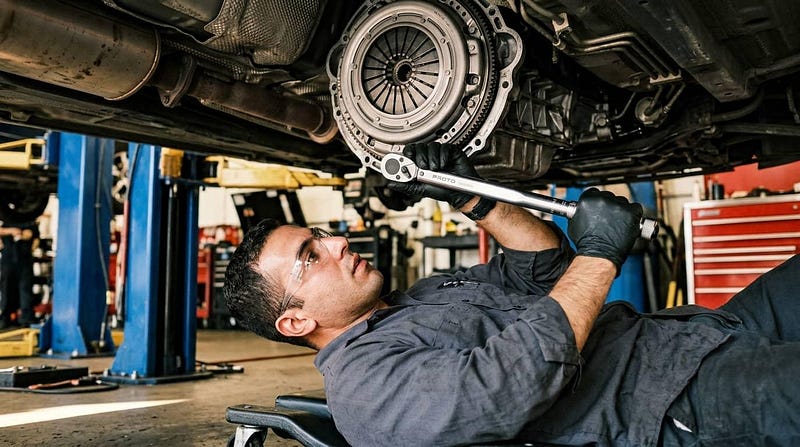
One of the most common questions motorists ask is about clutch replacement cost. There is no single figure that applies to every vehicle because the final expense depends on several factors.
The vehicle’s make and model is one of the biggest considerations. Some cars provide relatively straightforward access to the clutch assembly, while others require significantly more labour to remove and refit components.
Other factors include:
- Labour time and workshop rates
- Clutch kit specification
- Vehicle engine and transmission configuration
- Whether the flywheel requires replacement
- Condition of the release bearing
- Hydraulic system faults
- Additional components discovered during inspection
In many cases, garages recommend replacing the clutch as a complete kit rather than replacing only one worn component. A typical kit may include the clutch disc, pressure plate, and release bearing.
The flywheel should also be inspected during the repair. If it is damaged, excessively worn, or affected by heat spots, replacing it at the same time may be appropriate. On vehicles equipped with a dual-mass flywheel, the condition of that component can have a substantial effect on the overall repair bill.
For this reason, online price estimates should be treated as general guidance rather than a guaranteed quotation.
Finding Reliable Clutch Repair in the UK
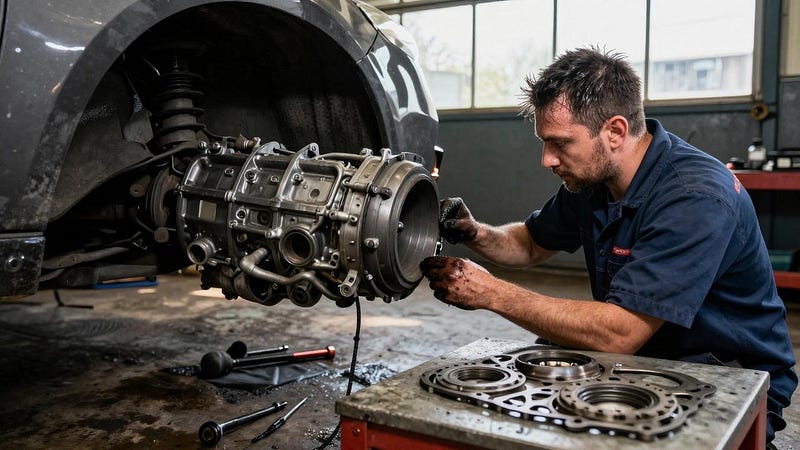
When looking for clutch replacement near me, motorists often focus entirely on price. Cost is important, but the quality of diagnosis and workmanship can be equally significant.
A sensible approach is to compare garages based on several factors rather than selecting the lowest advertised figure.
Look for a workshop that can:
- Diagnose the underlying fault before recommending parts.
- Explain which components are worn or damaged.
- Provide a clear breakdown of labour and parts.
- Identify whether the flywheel and hydraulic system require attention.
- Explain the warranty or guarantee applicable to replacement parts and labour.
- Use appropriate equipment and manufacturer-recommended procedures.
Local garages can also be useful when a vehicle develops symptoms unexpectedly because accessibility and familiarity with common regional driving conditions can make ongoing maintenance more convenient.
For example, motorists researching car clutch repair Trowbridge can review local automotive service providers such as S&M Auto Service and use the available information about clutch repair and replacement to understand what an inspection may involve.
How Drivers Can Extend Clutch Life
Although clutch wear is inevitable, driving technique can have a major influence on how quickly components deteriorate.
Avoid resting your foot on the clutch pedal while driving. Even light pressure can partially disengage the clutch and increase friction.
Drivers should also avoid holding a vehicle on an incline using the clutch. Using the brake and applying the clutch appropriately reduces unnecessary heat and wear.
Other useful habits include:
- Fully depress the clutch when changing gears.
- Avoid unnecessary clutch slipping when moving away.
- Do not accelerate aggressively while the clutch is partially engaged.
- Avoid carrying loads beyond the vehicle’s recommended capacity.
- Have unusual noises, smells, or pedal changes investigated promptly.
- Follow the vehicle manufacturer’s maintenance recommendations.
These habits are particularly useful for motorists who regularly drive through congested urban areas where frequent stopping and starting places additional demands on the clutch.
Repair or Complete Replacement?
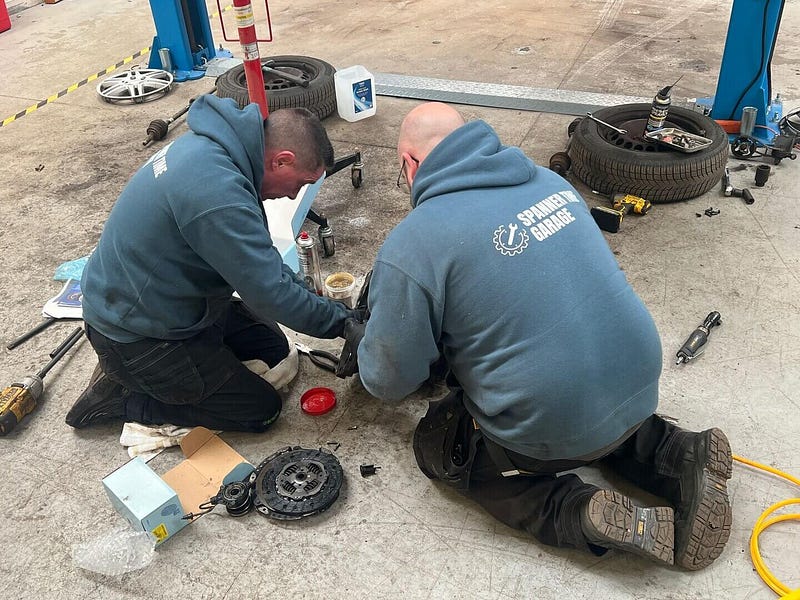
Not every clutch-related problem requires the same solution. A clutch cable, hydraulic cylinder, release mechanism, or related component may sometimes be responsible for the symptoms.
However, if the friction components are significantly worn, replacing the complete clutch assembly may be more practical than installing individual parts. The correct approach depends on the vehicle, mileage, symptoms, inspection results, and condition of associated components.
Professional diagnosis is particularly important because symptoms can overlap with gearbox, driveshaft, engine, or hydraulic faults. Replacing a clutch without confirming the underlying cause can result in unnecessary expense.
A thorough inspection should therefore establish whether the problem is caused by normal clutch wear or another component in the drivetrain.
Why Early Diagnosis Matters
Delaying a clutch inspection can sometimes turn a relatively straightforward repair into a more complex one. A slipping clutch generates heat, and continued operation under severe slipping conditions can contribute to additional damage.
Likewise, ignoring difficulty selecting gears or abnormal pedal behaviour can leave a driver vulnerable to becoming stranded if the clutch eventually fails.
For motorists searching for car clutch repair near me, the most useful first step is not necessarily finding the cheapest advertised service. It is finding a competent repairer capable of identifying the actual fault and explaining the appropriate repair.
Final Takeaway
Clutch wear is a normal part of manual vehicle ownership, but recognising the warning signs can help drivers manage repairs more effectively. Slipping, juddering, unusual pedal behaviour, burning smells, and difficulty selecting gears should not be ignored.
Understanding the factors behind clutch replacement cost, comparing repair options, and maintaining good driving habits can help motorists avoid unnecessary expenditure and extend drivetrain component life.
Whether the requirement is routine assessment or urgent repair, informed decision-making starts with accurate diagnosis. For UK drivers, especially those looking for clutch replacement near me, choosing a qualified local workshop and asking clear questions about parts, labour, flywheel condition, and warranty coverage can make the repair process considerably more straightforward.
Contact Us :
Read More : https://www.smautoservice.co.uk/clutch-repair-replacement-trowbridge-uk/
Read More : https://smautoservicecouk.blogspot.com/2026/08/top-10-reasons-to-book-pre-mot-check-in.html
Read More : https://mingolive.com/blogs/4152/Top-10-Car-Problems-That-Professional-Diagnostics-Can-Detect-in
 French
 English
 Spanish
 Portuguese
 Deutsch
 Turkish
 Dutch
Dutch
 Italiano
 Russian
 Romaian
 Portuguese (Brazil)
 Greek
Greek