


What Makes Name Badges Ireland Such a Simple Yet Powerful Idea?
Picture a reception desk, a busy exhibition hall, or a lively hotel lobby. Dozens of people may be moving around, yet one small detail can make conversations considerably easier: a clearly displayed name. This is where name badges Ireland can make a practical difference, helping employees, guests, volunteers, students, and event participants identify one another without unnecessary confusion.
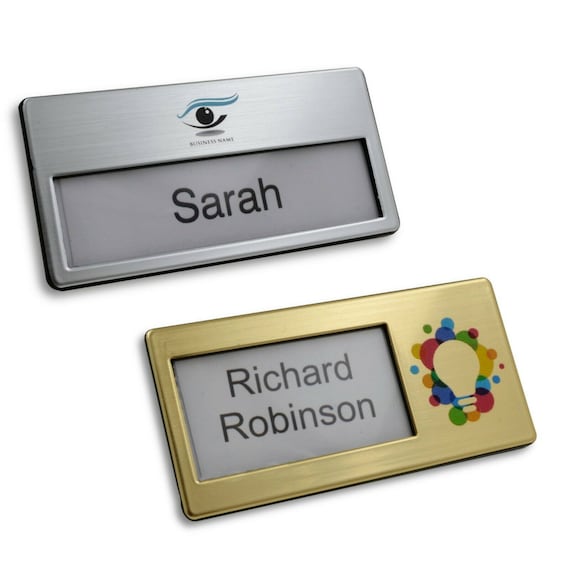
Although name badges are straightforward by nature, their usefulness extends well beyond basic identification. They can contribute to professional presentation, improve customer interactions, encourage networking, and strengthen the visual identity of an organisation.
The secret is in how they are designed and used.
Making People Easier to Approach
Walking up to a stranger can sometimes feel uncomfortable.
You may want to ask a question, but you are unsure whether they work there. Perhaps you have already been introduced but cannot remember their name. In a crowded environment, these little uncertainties can prevent conversations from happening naturally.
A visible name badge removes part of that hesitation.
When a person's name is displayed clearly, there is an immediate point of connection. A customer can address an employee directly. A conference attendee can introduce themselves to another participant. A visitor can quickly identify someone responsible for helping them.
That small amount of clarity can make an environment feel much more welcoming.
The Role of Badges in Modern Workplaces
A workplace is made up of people performing different responsibilities.
In a larger organisation, employees may not know every colleague personally. Visitors may have even less knowledge about who works in which department.
Name badges provide a simple visual solution.
Alongside a person's name, a badge can display a job title, department, or organisational identity. This gives colleagues and visitors useful information without requiring a lengthy introduction.
For customer-facing teams, the advantage can be particularly noticeable.
A customer entering a business should be able to recognise staff quickly. Clear identification can make assistance easier to find and can contribute to a more organised impression.
Adding Personality to Professional Presentation
Professional does not have to mean boring.
A name badge can reflect the personality of an organisation while remaining easy to read.
A modern technology business might prefer a minimal design. A creative agency could use more expressive elements. A hotel may choose an elegant appearance, while a family-oriented organisation might favour warmer colours and friendly typography.
The design should feel connected to the environment.
Including a company logo, appropriate colours, or a distinctive shape can turn an ordinary identification item into part of the organisation's visual identity.
When badges coordinate with uniforms and other branded materials, the entire presentation can feel more considered.
Helping Customers Build Connections
Customer service is ultimately about people.
Even when technology handles bookings, payments, or enquiries, human interaction remains important in many industries. Customers often feel more comfortable when they know who is assisting them.
A name badge can make that interaction feel personal.
Instead of speaking to an anonymous employee, the customer can see a name and address the person directly. That small change can create a friendlier tone.
This can be valuable in hospitality, retail, healthcare-related administration, tourism, education, events, and many other customer-facing environments.
A badge does not replace good service, of course. It simply helps create the conditions for better communication.
Networking Without the Awkwardness
Professional events can be full of opportunities and uncertainty.
Imagine entering a conference with hundreds of attendees. You may want to meet people from particular industries, companies, or professional backgrounds, but approaching complete strangers can feel difficult.
Name badges can make networking more natural.
If attendees can see names and organisations, they have an immediate starting point for conversation. A person might notice a familiar company, an interesting role, or a shared area of expertise.
The badge therefore becomes more than identification.
It becomes an invitation to communicate.
For event organisers, this can help create a more interactive atmosphere where participants are encouraged to meet beyond the people they already know.
Making Events Easier to Organise
Large gatherings involve many moving parts.
There are organisers, speakers, exhibitors, volunteers, security personnel, technical teams, guests, and attendees. When everyone looks like another participant, finding the right person can become unnecessarily difficult.
Badges can introduce visual categories.
Different roles can have distinct colours, labels, or layouts while retaining a consistent event identity. A participant can then recognise an organiser quickly, while staff members can identify people with particular responsibilities.
This is especially useful during conferences, exhibitions, festivals, charity gatherings, school events, and corporate functions.
A well-planned badge system can quietly improve the flow of an entire event.
Schools Can Use Them Creatively
Educational settings offer another interesting application.
Teachers and permanent staff may already be familiar faces, but visitors, guest speakers, volunteers, and temporary personnel may not be.
During open days, performances, parent meetings, competitions, and other special occasions, visible identification can help everyone understand who belongs to the organising team.
Schools can also create badges for student representatives, prefects, club leaders, or event volunteers.
This gives students responsibility while making their roles visible to others.
For younger pupils especially, friendly and clearly designed badges can make unfamiliar adults easier to recognise.
Supporting a Sense of Belonging
Identification is only one side of the story.
A badge can also communicate membership.
When an entire team wears matching identification, there is an immediate visual connection between individuals. Each person remains unique because their name is displayed, but the shared design shows that they belong to the same organisation.
This can strengthen team identity.
The effect can be particularly useful for temporary teams formed for conferences, festivals, community projects, and large-scale events.
A matching badge can provide a small sense of unity from the moment participants arrive.
Designing for Readability
A visually impressive badge is not necessarily an effective badge.
The most important information needs to be easy to spot.
Names should have enough visual prominence to be read during normal conversation. Secondary details such as departments or job titles can support the name without competing with it.
Typography is therefore important.
Decorative fonts may look attractive, but excessive styling can reduce readability. Similarly, too many colours or graphic elements can make a small badge appear crowded.
Simple design principles often produce the strongest results.
The goal is not to include everything.
The goal is to display the right information clearly.
Selecting a Suitable Shape and Finish
Traditional rectangular badges are familiar, but organisations do not have to limit themselves to one format.
Different shapes can create different impressions. Rounded corners may feel approachable, while sharper lines can create a more contemporary appearance. Custom outlines can make an organisation more recognisable.
Finishing choices can also influence the overall character.
A polished appearance may suit a formal environment, while colourful details could work better for schools, community groups, or informal events.
The badge should complement its surroundings rather than compete with them.
Thinking About Everyday Practicality
If a badge will be worn every day, comfort and convenience become important.
Employees may attach it to uniforms, jackets, shirts, or other garments for long periods. The fastening needs to remain secure, while the badge itself should be appropriately sized for the clothing.
Organisations should also consider how often badges will be handled.
Daily-use identification may require a particularly durable approach, whereas a one-day event may have different requirements.
Matching the design and construction to the intended use helps prevent practical problems later.
Making Branding Feel Natural
Brand promotion does not always have to be loud.
A discreet logo on an employee's name badge can reinforce recognition without overwhelming the design. When combined with consistent colours and typography, it can contribute to a cohesive brand experience.
For businesses and organisations seeking personalised identification products, Abbey Badges offers options that can be tailored to different professional, educational, event, and organisational environments.
The important thing is to create a badge that serves people first while naturally supporting the identity of the organisation.
A Small Tool With Many Uses
One reason name badges Ireland remain relevant is their remarkable versatility.
The same basic concept can serve a hotel employee, conference organiser, school volunteer, retail assistant, company representative, or community worker. The purpose may change, but the fundamental benefit remains the same: making people easier to identify and approach.
That simplicity is part of the appeal.
A badge does not require complicated technology. It does not need batteries, software, or an internet connection. It simply provides useful information at the moment it is needed.
The Value of Being Recognised
There is something reassuring about knowing who you are speaking with.
A name badge can turn an unfamiliar employee into a recognisable person. It can help a visitor find assistance, give a customer confidence, or help two professionals discover a shared interest at an event.
Its physical size may be modest, but its practical role can be surprisingly significant.
For organisations considering identification solutions, the best approach is to think beyond the badge itself. Consider the people who will wear it, the individuals who will read it, the environment where it will appear, and the impression it should create.
When all those elements work together, a simple name badge becomes much more than a label.
It becomes a quiet communication tool—one that introduces people, supports professionalism, encourages interaction, and helps everyday encounters feel a little more personal.
 Deutsch
 English
 French
 Spanish
 Portuguese
 Turkish
 Dutch
Dutch
 Italiano
 Russian
 Romaian
 Portuguese (Brazil)
 Greek
Greek